Introduction
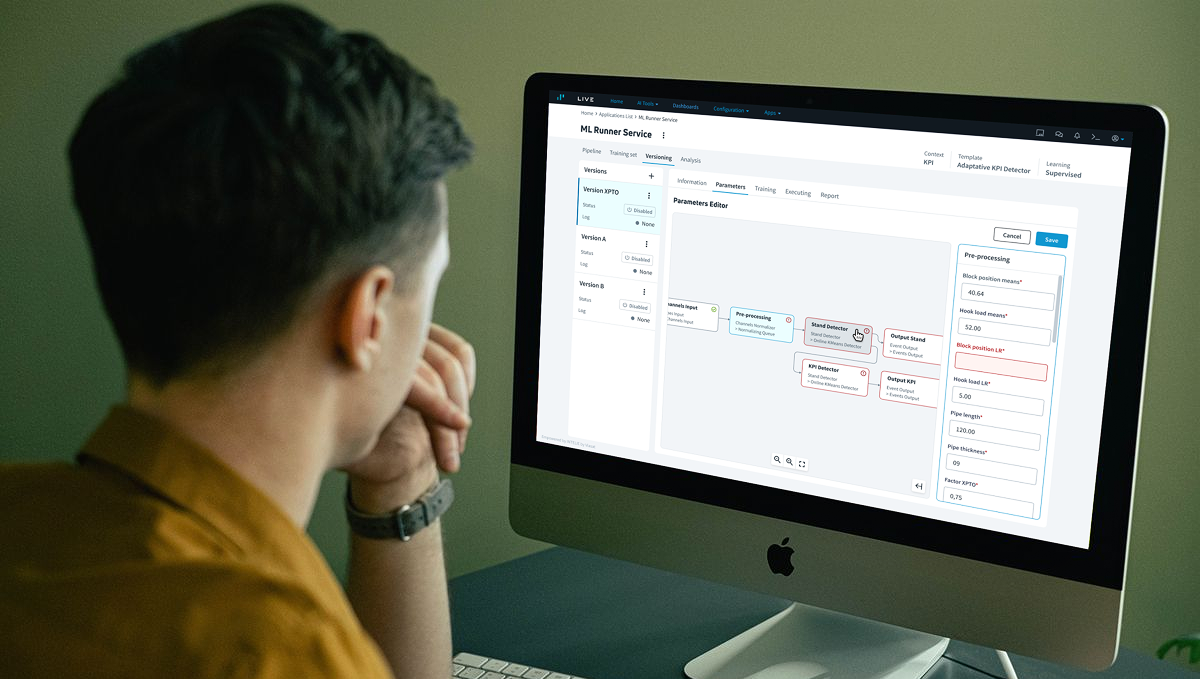
When I joined the team, the platform had been developed almost entirely by engineers and data scientists, resulting in powerful functionality but a fragmented user experience. Screens were inconsistent, workflows forced users to backtrack, and the information hierarchy often caused confusion. My role as the sole designer was to step back, research how data scientists actually build models, and redesign the experience so the tool could feel intuitive, efficient, and aligned with their mental models.
The challenge to face
For data scientists and SMEs, the platform’s unclear user flows and inconsistent information hierarchy made building and tuning ML models slow and confusing. I redesigned the experience to align with their mental models, reducing friction and improving navigation.
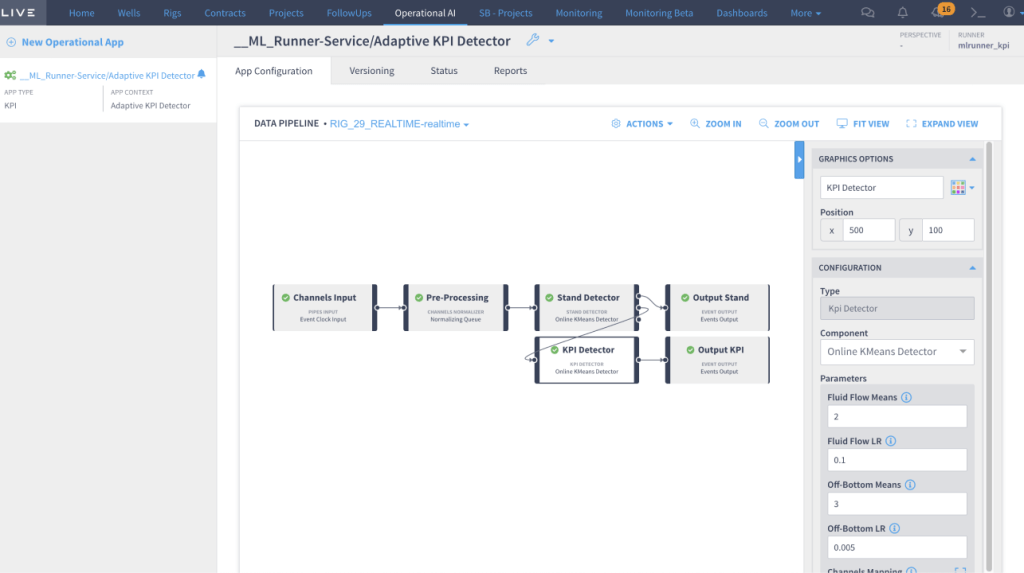
Legacy solution built primarily by engineers and data scientists
The solution
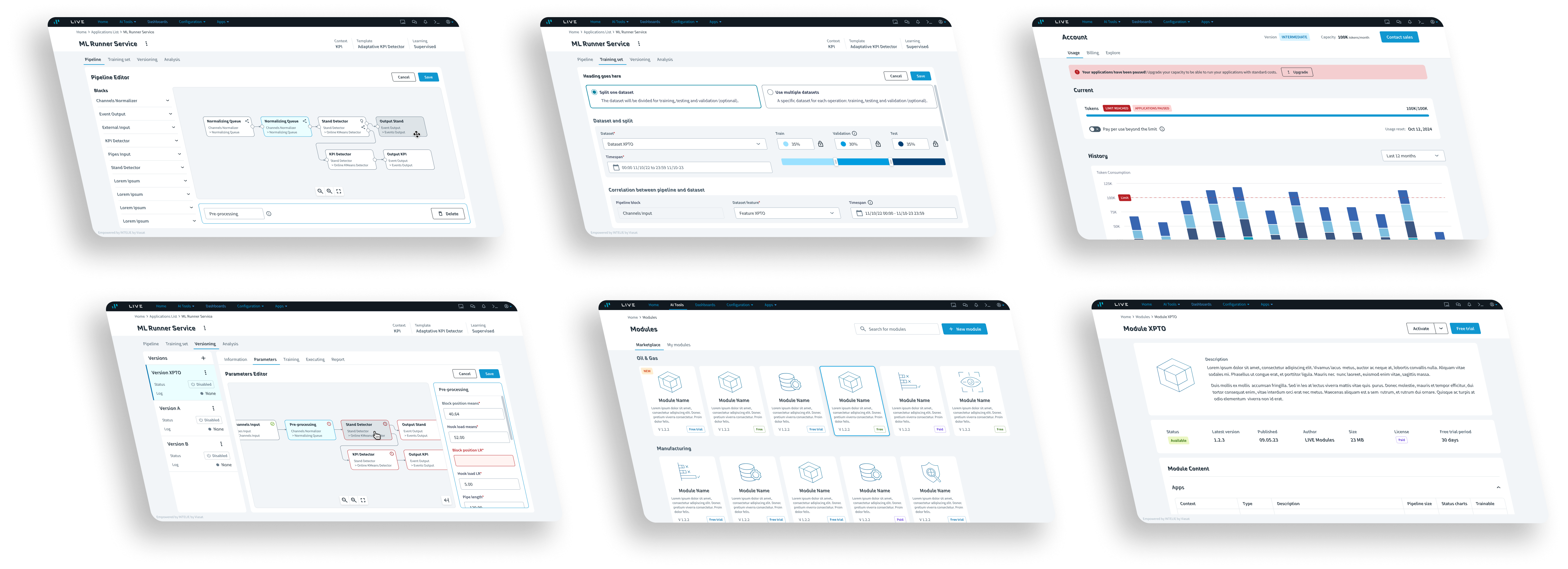
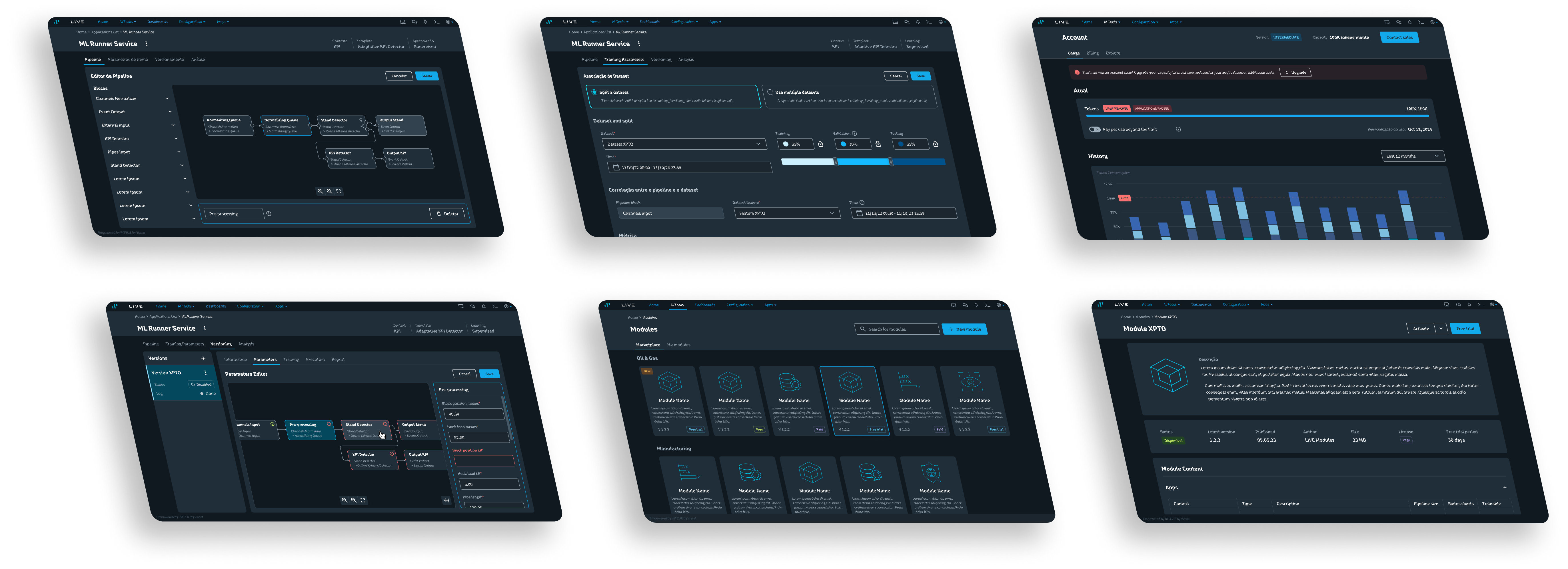
The result of this work was a redesigned experience that aligned the platform with how data scientists actually think and work when building machine learning models. By restructuring user flows, clarifying the information hierarchy, and reducing unnecessary backtracking, the platform became easier to navigate and more predictable. Core tasks such as configuring pipelines, comparing model versions, and collaborating with SMEs could be completed in a linear, confidence-building flow instead of fragmented steps.
The outcome
Usability tests showed that participants could complete model configuration without backtracking, a major improvement over the previous design. The new flow reduced unnecessary navigation steps and clarified the information hierarchy, making the process faster and more intuitive. Data scientists reported feeling more confident navigating the tool, and SMEs could collaborate more smoothly without relying on developers for guidance during testing sessions.
Scaling the solution
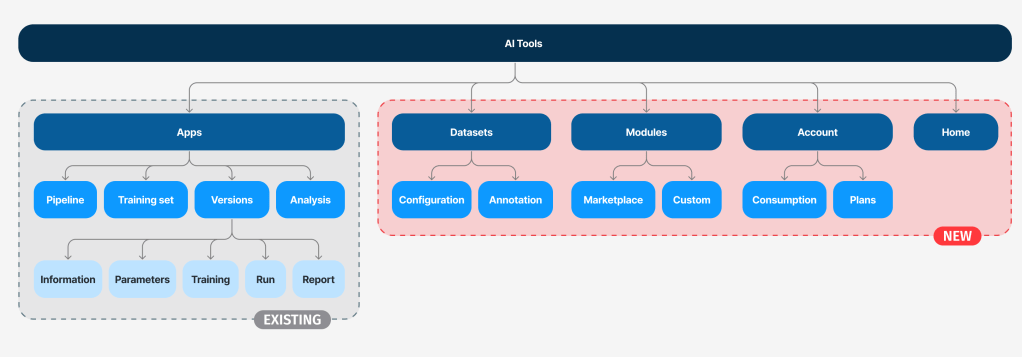
With this redesign, the platform’s scope expanded beyond model execution into a more complete AI workspace. What was previously centered almost exclusively on “Apps” evolved into a broader ecosystem that also includes datasets, reusable modules, account management, and home-level entry points. This shift clarified responsibilities across areas, reduced cognitive load, and made it easier for users to understand where to configure data, build pipelines, manage resources, and monitor usage. By redefining the information architecture, the platform became more scalable and better prepared to support new features without compromising usability.
The process behind
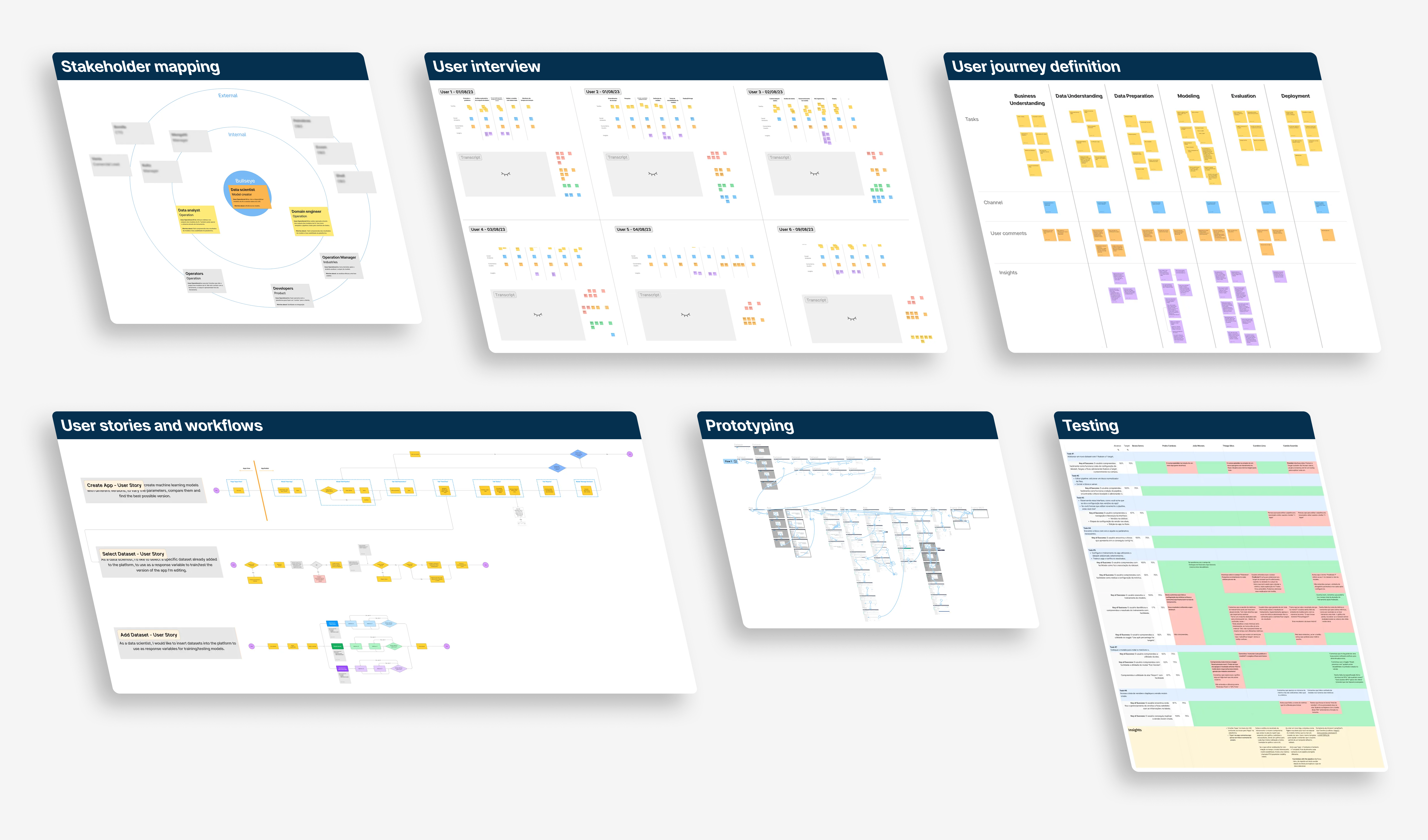
Rather than focusing on isolated UI improvements, I approached this project as a UX redesign grounded in user understanding. The process below highlights how research, synthesis, and validation informed the redesign of flows, information architecture, and interaction patterns.
Stakeholder mapping
Mapped stakeholders with the team to clarify roles, decision-making, and primary users. This aligned the project around data scientists as the main audience, with SMEs identified as secondary collaborators.
User interviews
Conducted semi-structured interviews with data scientists to understand how they build ML models in practice. The focus was on mental models, workflows, terminology, and pain points outside the platform.
User journey definition
Synthesized interview insights into a unified user journey covering the full model creation process. This helped reveal gaps, friction points, and misalignment between user expectations and the existing flow.
User stories and workflow
Translated the journey into user stories and structured workflows. This broke complex tasks into clear, sequential steps and ensured each screen supported a single, well-defined goal.
Prototyping
Created low- and mid-fidelity prototypes to validate flows, navigation, and information hierarchy. Prototypes were used to test assumptions early and collaborate closely with the team.
Testing
Ran usability tests with target users to validate task completion, clarity, and navigation. Findings informed iterations and helped establish a stronger UX foundation for the next release.
